The Wales Centre for Public Policy (WCPP) has supported Swansea policy makers, practitioners and lived experience experts to develop evidence-informed solutions to help public services shift the dial on tackling poverty stigma, a debilitating dimension of poverty that can affect mental health and prevent individuals from accessing vital support including financial help.
The result of the collaborative research project - Voices of Swansea - Challenging Poverty Stigma Together - will inform Swansea Council’s Tacking Poverty strategy and completes a body of work by WCPP that could significantly help efforts to reduce poverty stigma in the design and delivery of public services.*
Key findings
How do people experience poverty stigma in Swansea?
The community research, based on lived experience of poverty in Swansea, found that:
- Early experiences of poverty stigma can shape how individuals perceive themselves throughout their lives, despite parents striving to shield their children from their family situation.
- Traditional and social media can reinforce poverty stigma, by creating pressure for families to display a lifestyle they can’t afford, especially around special occasions such as Christmas.
- Accessing services can feel demoralising. Food banks, benefits assessments and other support systems can be stigmatising for individuals in poverty, especially when they are asked to repeat personal experiences across different services.
- Poverty stigma intensifies when people feel blamed or labelled as lazy for choices shaped by poverty and the systems surrounding them such as work incentive traps.
- Poverty stigma can interact with other forms of discrimination, including that experienced by people with disabilities or from other countries.
- Unwelcoming buildings, including the presence of security guards can create a perception that people that need access to services aren’t welcome or valued.
What can policy and practice do to reduce poverty stigma?
Voices of Swansea - Challenging Poverty Stigma Together recommends priority actions that public services could take on board to challenge and reduce stigma.
These focus on three key themes:
- Removing stigma from access to support;
- Delivering services with dignity and respect and;
- Changing language, culture and systems around the way public services are designed and delivered.
Within each of these three themes, the report includes practical recommendations for change.
Removing stigma from access to support includes:
- eliminating repetitive assessments;
- offering multiple services under one roof; and
- streamlining support processes across local authority departments.
Delivering services with dignity and respect includes:
- ensuring that services are convenient for the people who need to access them, such as by maintaining physical access options to avoid digital exclusion;
- providing poverty stigma training for professionals to address stigma in service design and delivery; and
- explore ways of better supporting groups most likely to experience poverty stigma, such as asylum seekers and refugees, who often face worklessness.
Changing culture, language and systems includes:
- increasing the involvement of people with lived experience in the design, delivery and evaluation of services; and
- simplifying and reframing language such as forms and letters.
WCPP Director of Policy and Practice (Public Services), Amanda Hill-Dixon said, “The fact that we were able to co-produce ‘Voices of Swansea - Challenging Poverty Stigma Together’ with a team of Swansea-based community researchers has made a huge difference to finding practical, local policy solutions to this debilitating aspect of poverty. Combined with the results of a pan-Wales survey we commissioned on the scale and nature of poverty stigma in Wales, and academic evidence on what works to address it, we now have a bank of knowledge to help public services to shift the dial on this important issue.
“It’s encouraging that this co-produced research will be used by Swansea Council to inform its Tackling Poverty strategy and we are confident that many other local authorities and public services across Wales and beyond will also find it useful.”
Dr Tarh Martha Ako Mfortem, one of the community researchers who worked on the project said, “Our findings point to failing policies, not people. It is imperative to involve everyone in shaping policies that seek to address their needs. We now know that early help and intervention can prevent stigma and its long-term effects."
Jane Whitmore, Swansea Council’s Interim Chief Officer for Commissioning and Resources, said: “We're pleased to see this valuable work come together. This research will directly feed into Swansea Council's upcoming Tackling Poverty Strategy and the fact that it was co-produced by community researchers who have gathered crucial insight into how poverty stigma affects people's lives in Swansea and what actions can be taken to address this adds considerably more meaning and significance to its findings."
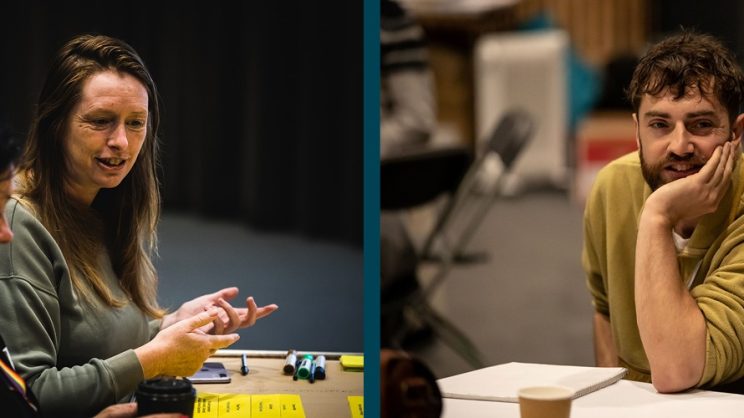
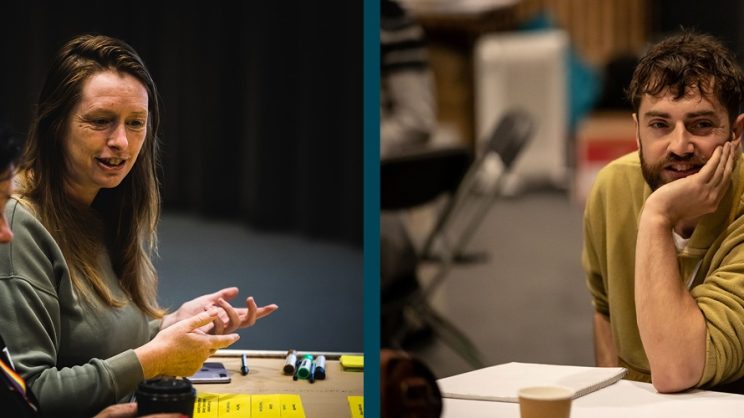
As part of the Voices of Swansea project, WCPP commissioned a series of photographs of people and places around Swansea that illustrate inclusive and supportive practice in line with the key recommendations of the research. The series was co-designed with the team of community researchers who co-produced the research and the images were made by Sukhy Hullait who has led other stigma-free photo projects.
*WCPP’s work on poverty stigma includes What works to tackle poverty stigma, a review of international evidence and Lifting the Lid on poverty stigma, a YouGov survey which revealed that 25% of Wales’ adult population had experienced some form of poverty stigma in the previous year. The Centre has also hosted a Poverty Stigma Insight Network for the past two years, bringing lived experience and practitioner expertise and academics together to share knowledge.