The conflict between the US and Iran, together with Iranian strikes on other Gulf states and the closure of the Strait of Hormuz, have had a major effect on the UK economy. Although a ceasefire had been declared, hostilities have restarted with the United States bombing Iranian targets and the Iranians striking at US bases in the Gulf. The effects of the conflict have already been felt. Since February, the National Institute for Economic and Social Research (NIESR) has revised down its forecasts for UK GDP growth this year and next by 0.3 and 0.2 percentage points for 2026 and 2027, respectively, relative to its February forecast. At the same time, it revised up its forecasts for UK CPI inflation in 2026 and 2027 by 0.8 and 1.1 percentage points, respectively, on account of the higher energy prices. The question is: what does this mean for the Welsh economy and the Welsh Government?
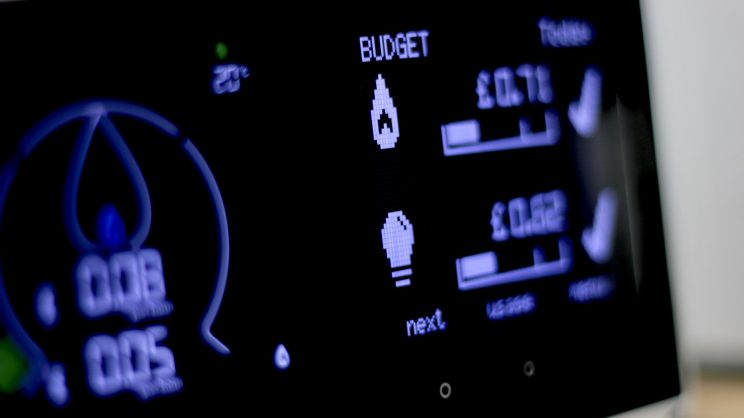
The clearest effect of the conflict has been on energy prices. The average petrol price in the United Kingdom as a whole rose from £1.32 per litre on March 2nd to £1.58 per litre on April 13th, since when it has remained over £1.50 per litre. With much of Wales being rural, increased transport costs are likely to have a particularly large effect on Welsh households and businesses. At the same time, household gas and electricity prices – which are determined within Great Britain by the OfGEM price cap – rose by 13 per cent for the average household in Great Britain, though the increase was slightly lower in Wales.
Higher energy price rises are also likely to have a particularly large effect on Welsh industry, given manufacturing – which uses more energy than services – forms a larger share of employment in Wales than elsewhere in the United Kingdom. Steel production is heavily energy intensive, and the aerospace industry, which is important in Wales, will also be affected by higher fuel costs, disrupted supply chains and increased insurance costs. We are witnessing a classic ‘supply shock’, which means it is likely that output will be lower than it would have been absent the Iran conflict. A rough simulation of NIESR’s global econometric model (NiGEM) suggests a hit to Welsh GDP of around 0.15 per cent in 2026.
A big unknown will be the impact of the closure of the Strait of Hormuz on food prices, given the amount of grain and fertiliser that is transported through the Strait. So far, at least, food prices have not been as badly affected as might be expected, though it is likely that food price inflation will rise over 2026. This is important given poorer households spend a larger fraction of their income on food (and energy).
Overall, therefore, the higher inflation will likely hit poorer households more than richer households, with those on lower incomes having less scope to absorb higher living costs. It will also put pressure on the budget of the Welsh Government: a given amount of nominal spending will result in lower provision of public services, and the Welsh Government has only a limited ability to raise taxes to pay for any increase in spending. This also suggests that there is only limited, if any, scope for providing support to households within Wales (over and above any UK-wide support). Should the Welsh Government decide to provide support to households, it would be important to ensure that the support goes to poorer households. Blanket support to all households would be much more expensive and would effectively favour rich households (who spend more on energy) relative to poor households.
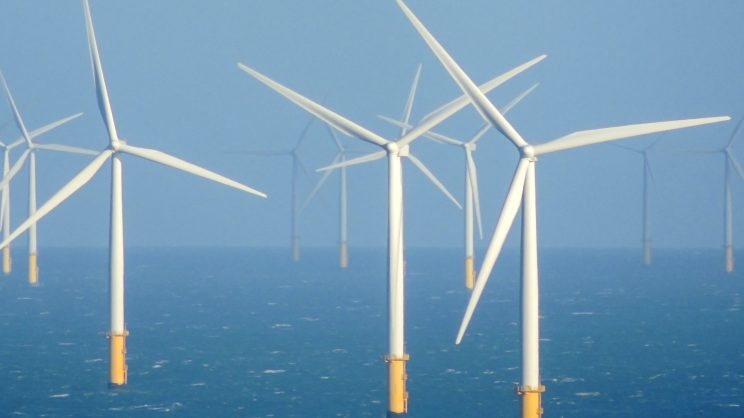
In the medium to longer term, the Welsh Government needs to work with the UK Government to build up resilience to energy shocks via accelerating the transition to net zero, while ensuring that investment is targeted according to the needs of Wales and Welsh Government’s energy policy. For example, previous collaboration with Ofgem on grid upgrades, together with efforts to work with the Crown Estate and other bodies to increase offshore wind production in the Celtic Sea provides a strong foundation to build upon. The Welsh Government could also expand rooftop solar on public buildings and increase battery storage and local energy storage schemes.
While the course of the conflict remains highly uncertain, its economic consequences are already becoming clear. For Wales, the challenge is not only to respond to the immediate pressures on households and businesses, but also to strengthen resilience against future energy shocks. Building a more secure, diversified and low-carbon energy system will not eliminate geopolitical risks, but it can reduce Wales's exposure to them in the future.
Biographical Note
Professor Stephen Millard is the Deputy Director for Macroeconomic Modelling and Forecasting at the National Institute of Economic and Social Research, having previously worked at the Bank of England. His research interests include monetary and macroeconomic policy; labour, employment and wages; inflation dynamics; and the implications of climate change and climate policy for monetary policy and the macroeconomy.