What does it take to hold a community together in an age of growing division, mistrust and uncertainty? In Llanelli, a bold partnership between the Healing the Divide group, Carmarthenshire County Council (West Wales Cohesion Team), Belong: the Cohesion and Integration Network, and the think tank British Future set out to answer that question.
The Healing the Divide initiative was designed not simply to respond to tension when it emerges, but to equip local practitioners with the confidence, skills and relationships needed to navigate difficult moments, strengthen trust and help build more connected and resilient communities across Llanelli.
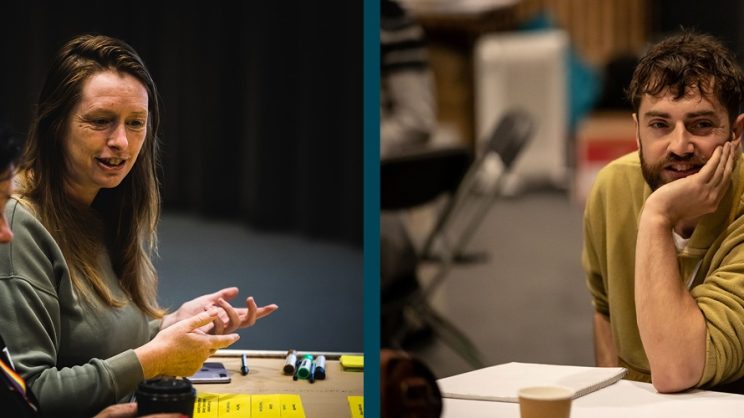
The initiative brought together local practitioners and community partners through a series of facilitated workshops and learning sessions, combining practical skills, shared reflection and discussion of the real tensions affecting Llanelli. Sessions explored difficult and divisive conversations, trust and relationship-building, and the impact of misinformation and disinformation, while creating space for participants to learn from one another and consider how these approaches could be applied locally.
It became apparent that the ‘work’ wasn’t about introducing something entirely new. The foundations already existed - committed local council officers, active voluntary organisations and community groups, and a strong sense of place and identity. The challenge was how to create the conditions for these assets to connect, adapt, and respond to change.
Start with people, not policy
One of the clearest lessons was that cohesion isn’t experienced as a strategy - it’s lived day to day. Conversations about “community cohesion” can often feel abstract, but when reframed around belonging, fairness, and feeling at home, people can engage more openly.
Grounding the work in local realities - specific neighbourhood dynamics, shared spaces, and lived experiences made it meaningful.
Create the space before expecting the shift
Across the programme, we prioritised creating safe, facilitated workshops where people could speak honestly. That meant acknowledging tension, not skirting around it.
Once that space was established, something important happened: people felt safe to open up. Difficult conversations about identity, change, and misinformation became possible and productive. In many cases, participants shifted their perspectives over the course of the programme.
It’s a reminder that dialogue isn’t a “soft” intervention. When structured well, it can be one of the most effective tools we have.
Equip people to act, not just understand
A consistent message from participants was the need for practical tools. Frameworks for structuring conversations, simple techniques for de-escalation, and ways to respond to misinformation all helped build confidence.
This wasn’t about turning people into specialists. It was about giving frontline staff and community partners enough confidence to act - to step into difficult moments rather than avoid them.
Emotion is not the problem - it’s the entry point
Frustration, anxiety, and fatigue were apparent in many of the conversations. Rather than treating these as barriers, the programme worked with them. The discussions helped participants recognise what sits beneath surface-level tensions. When people felt heard, they were far more willing to listen in return.
Connection doesn’t happen by accident
Carmarthenshire has a strong network of organisations and community leaders. Through the programme and in partnership with the council and British Future - we saw the value of intentional convening. Bringing people together with a shared purpose, supported by structure, which began to shift relationships from informal to collaborative.
This is now carrying forward into the emerging Llanelli Together Network, a locally led space designed to sustain momentum, strengthen relationships, and unlock new opportunities for joint action.
Keep it local, keep it going
Perhaps the most encouraging outcome is the appetite for continuation. Participants didn’t see this as a one-off training; they saw it as the start of something. There is now a growing community of practice with the relationships and confidence to carry the work forward.
A final thought
If there’s one takeaway from Llanelli, it’s this: cohesion isn’t built just through big statements or standalone strategies. It grows through small, consistent acts of connection, conversations, relationships, and shared efforts over time.
The role of programmes like Healing the Divide/ Llanelli Together Network is to create the conditions for that to happen and then support local people to take it from there. This potentially creates something tangible that can be shared and scaled more widely in Wales.