As Wales charts its route to net zero, one thing is increasingly clear: the transition is not just about technology. It is about economic transformation — who owns it, who shapes it, and who benefits from it. Scotland’s journey offers valuable lessons on how a place-based, collaborative, community-led approach can maximise both climate and economic outcomes. But Wales also has the chance to do things differently — and better.
With elections on the horizon for both nations, and with net zero both topical and sometimes contentious, now is the moment to ensure each decision builds on best practice and delivers benefits widely and fairly across communities.
Scotland has shown what is possible even with energy as a reserved matter. Its Good Practice Principles encourage developers to contribute £5,000 per MW in community benefits, generating more than £194 million since 1990. Research suggests that for every £1 of community benefit funding, around £4.18 in additional local economic value is created. Yet more value could still be retained locally, which is why we’ve been supporting research into establishing a Scottish Community Wealth Fund from renewables.
Across the country, practical community wealth-building approaches are emerging. CLES worked with South of Scotland Enterprise to develop a Community Wealth Building Framework for Renewables, and with Highland Council on a Social Value Charter ensuring large-scale developments deliver additional value for local communities. Ownership also matters: Scotland’s strong third sector, backed by robust community empowerment legislation, enabled nearly 28,000 local and community energy installations by 2023.
Local authorities are increasingly part of the picture too. Orkney Islands Council is advancing its own wind farm, expected to generate £5.5 million annually, while North Ayrshire is progressing solar projects. When public and community ownership are part of the mix, the benefits multiply, financially, socially and democratically.
Wales is well positioned to go further. The Well-being of Future Generations Act 2015 offers a distinctive foundation for models of public, community and cooperative ownership that keep more wealth close to home. But ensuring Wales has the right skills in the right places will be crucial.
Both nations face shortages in engineering, retrofit and technical trades. But Scotland has learned that technical skills alone are not enough. Successful transitions also rely on:
- Local economic development skills to understand supply chains and design local interventions;
- Procurement and commissioning skills that open opportunities for local SMEs; and
- Community-facing skills that build trust, shape consent and align projects with local priorities.
The employment potential of a just transition is significant. CLES analysis found that decarbonising homes across Registered Social Landlords in the South of Scotland could sustain 6,690 direct jobs by 2045 and generate £340 million in direct GVA. Embedding these skills locally is the next step — and it is one where Wales could lead.
With the right alignment between colleges, local authorities and anchor institutions, Wales could establish a fully integrated, place-led skills system. A system that trains not only the workforce but also the institutions responsible for shaping the transition.
Another area where Wales could outpace Scotland is around land ownership, and the benefits that this can bring. In Scotland, longstanding land ownership patterns mean substantial revenues from renewable developments still flow to large estate landowners rather than local communities. Wales has an opportunity to utilise public land more strategically, ensuring value remains local and enabling more shared or community ownership models to flourish.
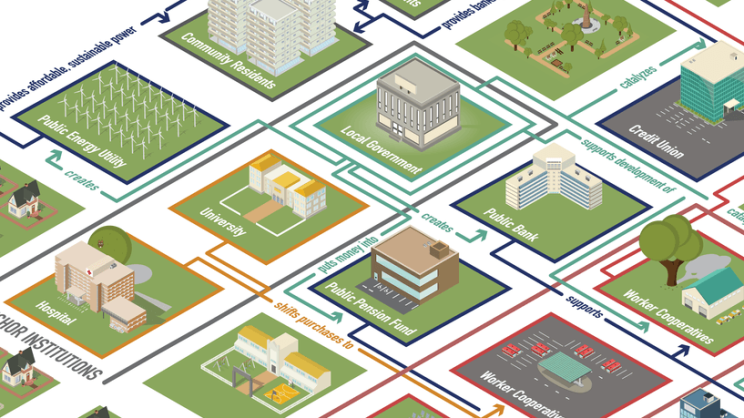
But retaining wealth is about more than land or ownership alone. For decades, economic models have allowed value generated locally to leak out through distant ownership structures and fragmented supply chains. A community wealth-building approach offers a corrective. By leveraging public procurement, strengthening locally rooted SMEs, and supporting co-operative and social enterprise models, Wales can ensure more of the wealth created within its borders is retained and recirculated. Maybe community wealth building legislation could follow?
The long-term nature of the net zero transition means decisions made today will shape opportunity and inequality, for decades. If Wales builds on its strengths, retains value locally and invests in both its people and its institutions, it can outpace Scotland in delivering a net zero transition that is locally owned, economically generative and socially fair.
The task for the next Welsh Government is clear: be deliberate, be ambitious, and embed justice and sustainability at the heart of net zero and economic development so that prosperity is shared, resilient and genuinely intergenerational. In other words, embody the aspirations of the Well-being of Future Generations Act.